Showing posts with label overthinking. Show all posts

Saturday, December 23, 2017

Wrong F-word, Runaways

I've been watching Marvel Runaways on Hulu, and it has totally sucked me in, let me tell ya! Admittedly, I had only heard vague whisperings of the comic on the intertubes, but I hadn't read it. But between the kickass trailer:


...and noticing that James Marsters* is in it, I decided I kind of had to see it for myself- and it hasn't disappointed.

For the most part. 


See, there's one** thing, one main thing that grates under my skin when I watch it. And the problem is, it's established so damn thoroughly in the pilot, I seek it out every time I watch a new episode, so that stuff that would be more innocuous otherwise gets to me. 


CONSIDER THIS YOUR SPOILER WARNING, FOLKS

So first, a brief summary of the show, and a breakdown of the characters:

Six highschool friends that have been estranged for two years over the death of a seventh member of their pack end up, through some rather realistic happenstance, hanging out together "like old times" while their parents hold a meeting for a group called Pride. Pride, as is presented, is a charity organization all of the parents founded before their kids were born, meeting once a year at the house of one of the families, the Wilder's. By more happenstance, the kids end up going through a secret passage and observing their parents, wearing deep red robes, participating in some sort of cult-like ritual involving what looks like a human sacrifice. The series follows both the parents as their motivations and desires are explained, as well as the kids as they try to figure out what they saw, why it happened, and how to deal with it. On the way, we find out that each of the kids has either a special power or skill that essentially helps them progress in their quest of figuring out what the Hell is going on. 

Some things really going for this, first, and in no particular order:

- A very diverse cast. One thing I particularly like about this is that the individual cultures of each family's ethnicity are subtly and organically included: The Minoru  parents go out for "real sushi" and have some artifacts that look they're authentically Japanese; Geoffrey, the father of the Wilder family, is a former gangster who discusses that lifestyle in very real ways (and we also get some good snapshots of what that looked like, as well as how it follows him in his "legit" life***); the Yorkes are Jewish but aren't stereotypes that use Yiddish and complain about things not being Kosher or what-have-you; the women in the show seem to be the bigger power-players when it comes to the parents, and there are literally double the number of girls vs. boys in our group of teens.

-The parents themselves have great character development. Not all of them- the Yorkes seem to serve as a constant source comic relief, and Leslie Dean's backstory seems to be on the slow burn path, but pretty much all of the other parents have interesting roles to play and show multiple sides and personalities, especially Tina Minoru and Victor and Janet Stein. 

-A realistic depiction of an abusive relationship. The Stein household is fraught with pain and anger, and the way both  Chase and his mom, Janet both simultaneously love and fear Victor, the way they keep hoping he'll change, is incredibly and tragically lifelike. We're shown that Victor genuinely does love his family more than anything, but that he has a dark side that rages against them and doesn't comprehend how to deal with that intense love and the magnitude of other feelings he may have towards them as a result of that love. While we're led to believe the Big Change in Victor (that lasts less than a whole episode) is a result of some Jonah Magic, Chase shouts, "You did it again! You made me believe you've changed!" at Victor when the old demons show themselves again at the end of E8 (and earlier in the episode, Robert says Janet is "caught up in the cycle of abuse,") so it's made clear this is hardly the first time Victor as put on a gentle face to keep his family. 

-Slow burn! I like a mystery, even though I'm terrible at solving them! Having so many hints dropped is tantalizing, sure. But the fact that they do actually get resolved keeps me coming back, especially when they add more bits and pieces that need unwrapping. If they just kept dumping confusing and unexplained junk onto the audience, I'd be turned off (I'm looking at you, J.J. Abrams), but that's not what's going on at all. 

-Realistic teenagers. For the most part (see my second endnote), I think the teenagers are actually depicted fairly well-rounded and authentically. I especially think the hurt they all demonstrate over the loss of Amy (before the series starts) is especially poignant- so far, at least, we aren't told why Alex didn't attend her funeral, and I actually like that. And the fact that Amy's death seems to be what drove the group apart is a sad but understandable plot point. Each kid dealt with it in different ways- Nico turned Wiccan/goth, Alex bared down on the hacking, Chase went full-on jock, Gert became a self-proclaimed feminist and SJW, Karolina started spending even more time at the church, and Molly seems to have kind of stagnated emotionally (no doubt because on top of losing a close friend, she was already an orphan). 

Okay, but The Problem. And I think this sums it up:


Essentially, Gert is presented as a straw feminist and "insufferable social justice warrior."

I noticed almost immediately that any time Gert made a comment she, as a character, intended to point out some sort of injustice or inequality, it was played for eyerolls and to make her, or rather her point, look annoying and act as kind of a killjoy. Sort of following the "feminists/SJWs don't like nice things" vein. And that's a serious problem, especially given that, ostensibly, the show is about diversity and acceptance, among other things- I mean, like I said, the cast is organically diverse. 

If you're unfamiliar with the concept of "straw feminist," I highly recommend you watch this video- whether you agree with Anita Sarkeesian or not+, she does a great job of explaining the concept and gives some solid examples to help you understand what it is, as well as why it's a problem.


This is the exact kind of stuff Gert says in Runaways- her friends/adopted sister are doing something innocuous or understandable/expected of a teenager, and she makes a comment that comes across as mean-spirited and deflating, but under the guise of "feminism."  What's most damaging about this, though, is that there is validity to what she's saying each time, and in a different context, it would be entirely appropriate and necessary. But when it happens onscreen for us, it just presents her as an asshole that likes to harsh everyone else's mellow. I went back and rewatched the seven episodes that are up as of now, and took notes/quotes. And what I discovered is that in the first episode, I was able to fill almost an entire page of a spiral notebook with relevant quotes/situations. It varies in amount from episode to episode after that, but every episode has at least one or two zingers. And while I won't go through and recount every single one, I'll  share a few and why they're both valid but problematic. Let's just start with the pilot.

SCENE: Gert and her adopted sister Molly are getting dropped off at school by their parents. Molly, who is a few years younger, is upset because she has seriously bad cramps, and, after an embarrassing remark from Mom about her using an orgasm to relieve the pain, she tries to change the subject by cheerily saying, "Dance Squad tryouts are today!"

Gert responds, looking super disgusted, "Ugh, Dance Squad is just cheerleading without pom-poms. You're just reinforcing hegemonic masculinity while marginalizing women's identities."

Big Word Vomit aside, these are pretty much the first lines we get from Gert, and they're her using feminist critique to be mean to her younger sister. And, the thing is, there is something to be said about the jock-cheerleader-dynamic and its role in gender structures for youths (and professional athletes, for that matter), and yes, that is an important conversation to have, especially with a young woman that wants to participate. But not like that. Not the way it's shown here, not when its purpose is to essentially bully one's younger sister. It makes the whole idea of questioning the gender and social structures of high school seem like a, well, a dick thing to do.

So this is a pretty shitty first impression of Gert. And the rest of the episode, most of her dialogue or actions somehow involve her either being somewhat hypocritical or a flat-out mean-spirited killjoy. She advertises a new club she's trying to start called "Undermining the Patriarchy," but then later reduces Chase to, and these are her exact words, "some roided out jockstrap" whose opinions only go as far as "what protein butter to use," while at the same time, objectifying him by staring creepily at his ass while following behind him as he's talking to one of his teachers. And this is just the first episode.
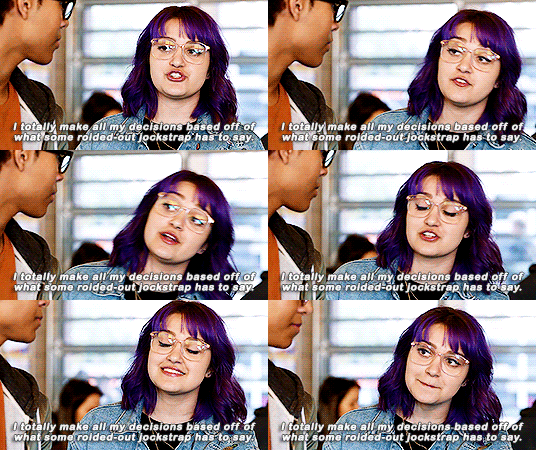


Speaking  of first impressions, Hulu filmed a non-canonical promo for Thanksgiving entitled "Not Your Typical Friendsgiving." The 47-second spot is our six teenagers sharing a Thanksgiving dinner together, at a table just large enough for all of them. It ends with a group of adults that are clearly their parents (their faces are invisible, but it's pretty obvious), in their big, red Pride ritual robes, popping up behind them and the kids looking scared, the final screen saying something like, "Now Streaming." The whole group starts the bit at least somewhat happy to be there, except Gert. Upon Alex remarking that Thanksgiving is his favorite holiday, she chimes in with, "Psh, of course it is. Hey, Alex, would you like this with a side of smallpox? Because that is what we served to the Native Americans, whose land we stole." Everyone is demonstrably uncomfortable in response, Nico even expressing that she's not hungry anymore. 

And okay, if you've read far back enough in my posts, you would know that I'm Lakota Sioux on my mom's side. And yeah, it pissed me off when she said it. But not at all you white folks. At the writers. Because it is true that the US was founded on murder and thievery and deception. That's a legit point, one that matters a HELLUVALOT to gals like me. And there are appropriate times to bring up how Thanksgiving is an easy way for people whose ancestors did the murdering and thieving and deceiving to feel better about/ignore their history (dare I say...  whitewash the thing? Eh?), while at dinner with your friends isn't. Not to be persnickety, but that's not the sort of thing you do during the event, you do it when invited and are politely declining. Or if you go, you don't bring it up, because it's pretty damn hypocritical for you to be actively partaking in Thanksgiving while disparaging it and its origins and all that jazz. 

Also, of all the people to direct that remark to, it's Alex. The Black kid. The kid whose ancestors were prooooobably slaves? Yeah, sure, blame his ancestors. Just plain tactless.

I digress... So once again, the real, valid point she's making is doing nothing to make viewers question the relevant geopolitical structures, but rather it's just making her look like an asshole that's entirely unconcerned for the social dynamics of the context in which she's in at the moment- and, in certain minds, no doubt, making them question the validity of her claims, rather than said geopolitical structures. Because it's made clear she understands things like conventional etiquette throughout the series; she just deliberately makes people uncomfortable with her "social critiques." And as this particular jab was about indigenous rights, I initially took it probably a little more personal than I should have. But when removing my personal baggage from the picture, it's disconcerting that a promo meant to draw in new customers that gives each character two lines at most, that its picture of Gert is one of mean "social justice warrior." 

Another angle she takes is "religious oppression." In the first couple episodes, she comes down hard on Karolina a few times about her family's religion, the Church of Giborrim. And it's juxtaposed against the other characters' perspectives, too. For example, in this same episode, Alex respectfully says he doesn't want to "interfere with [Karolina's] religion" by causing a scheduling conflict, an act of respect for Karolina's faith. And Karolina herself constantly talks about how genuinely happy her faith makes her because it's "positive and life-affirming," teaches her to see beauty and light in everything, everyone, and every situation. Gert, meanwhile, scoffs at the classification of "religion" for the Church of Gibborim, and asserts that "no institution has been as oppressive to women as organized religion."

And so again, the rub: 


Organized religion does have a shitty history in: re women. 

But instead, when she calls the Church of Gibborum a "cult" and says it's oppressive, she's bullying Karolina and insinuating she's stupid and duped, yet also complicit in the wrongdoing of all organized religion, and deceitful because she just "walks around with fake smiles, pretending to be happy all the time." So even though, sure, a legitimate critique of organized religion is absolutely necessary for good, inclusive feminist theory, Gert uses it as ammo to be cruel to someone she used to call a friend. And she reduces Karolina down to an antifeminist who only cares about "being a perfect church girl."

And what's hard is that it's made pretty obvious that most of her digs at Karolina are motivated out of jealousy because Chase shows signs of having, y'know, feelings for Karolina, while Gert has them for him. The most utterly disgusting bit of it comes across as passively homophobic, too.

In episode six, the kids are planning how to get to a party/gala thing Pride is putting on, and there's some talk about limos. Alex and Nico, who, at this point, are a fairly sold Thing, are going to take a limo together, and when Chase offers to get Karolina in his own, Gert says, "Ugh,


One limo, five stops."

Like, what the actual fuck? So what, queer people don't date? The writers co-opt the language of feminism to make a horrible blanket statement that disregards the experiences of GOD KNOWS HOW MANY NON-BINARY COUPLES/RELATIONSHIPS, and make Gert look like a homophobic asshole. It's reinforced by how uncomfortable the other kids look when she says it, too. And remember, this is in response to Chase offering Karolina a ride. The implication, here, is that feminism is really just the result of women's uncontrollable emotions. It gets further developed/pushed later in that episode, too. Nico and Karolina get ready for this gala together at Karolina's place, and Gert and Molly show up later, walking in on a pretty touching moment between the original two in the room. Later that night at the gala, Gert once again gets pretty homophobic for the sake of her feelings for Chase:


And Karolina, smartly, asserts that this would leave Chase available for Gert, who denies this is why. And when Karolina says she's wrong and ups the ante on her flirt game with Chase, Gert says, "Fine, enjoy, just know you aren't being honest about who you like."

This is pretty awful. In a different context, if we removed the Chase Factor, this would have been a beautiful scene. Lord knows queer teens have a hard time, and if it's true that Karolina is denying something because of that, a friend offering sincere kindness and support is exactly what she would need. But rather than being genuine, Gert's support for a potential non-straight identity in Karolina is presented as disingenuine and manipulative, as purely self-serving and hollow. And when Karolina calls it out, Gert acts as if she knows more about Karolina's own identity than Karolina herself does- and whether or not Karolina is, indeed, hiding something is beyond the point. Gert's assertion she knows "the truth" is arrogant and narcissistic, like she is the one that really knows what's best for Karolina. This is what some call "policing"- another thing antifeminists like to say is that feminism does too much moral grandstanding and "this is how you should behave"-ing, the "you don't really know what's best for you because you've been brainwashed by the patriarchy" condescension that actually does push people away from feminism. 


I should point out that Karolina is presented as her counter, though: While Gert is constantly pessimistic and mean, Karolina is optimistic and kind. Like in the first gif above, she stands up to Gert on more than one occasion, such as when she goes all in with Chase after Gert's "are you gay for Nico" bullshit. She also responds to Gert's "but we killed the Natives" remark in the Thanksgiving promo with a sweet declaration of her happiness to be there with her friends.  And her retort at Gert in the first episode during the "your 'church' is a cult and oppressive" bit, it kind of sums up the problem with Gert:

"You call yourself a feminist, Gert, but no one cuts down other women more than you do."


And this is a glorious window into just how much of Gert is made of straw. Because one of the big arguments antifeminists use against feminism is that it's "actually" harmful because it's "policing" and in itself oppressive and such. "If women want to be cheerleaders, isn't trying to stop them worse?" "If women want to practice [insert name of faith here], isn't it worse to tell them they can't?" Etc. And I think I've said before, I'm  a feminist that believes in a woman's own individual power over her body, her life, and her ideals. If a woman chooses to do A Thing, it's her choice. There's an addendum about knowledge and understanding and full internalization of the full range of choices available in a given context, but the example I usually  give is I have a Master's and would be happy to stay at home with the kids if my husband made enough money- not because I feel like I "should" do it, but because I grew up with a mom at home, and feel very lucky to have experienced that, and feel as though I would be good at it and want  to be as close to my kids as I am to my own mom. In itself, it has nothing to do with patriarchal structures, and I think that even if women do what's, on its surface, considered "upholding" the patriarchy, if it's done for reasons outside the parameters set in patriarchal structures, it can still "dismantle" it. 

And yes, that may sound like I'm actually giving a passive go-ahead for patriarchal norms, but this post isn't really about me, it's about Gert. If you want more on that, ask in the comments, but for now, just understand that I'm getting at how Gert's brand of feminism is the kind those against feminism point out when trying to argue against it. She's your quintessential "FemiNazi." Her constant finger-pointing and accusatory remarks make her the straw feminist of every intersectional feminist's nightmares, including your author, right here.

And let's not forget how in episode six, she pretends to be attracted to two guards at the Pride Gala, using her feminine wiles to clear the path for Alex and Nico to sneak upstairs. She isn't vocalizing a bunch of feminist taglines during any of these scenes, but it stands in stark contrast to the ideals by which she proportedly lives. This is more of the hypocrisy, then- women have been oppressed since the dawn of time, but it's totally okay for a woman to seduce a man to get what she wants. It's like something straight off of an MRA site, one of those "the femiNazis will do whatever it takes to get what they want" kind of rants. They'd talk about women faking feelings/attraction in the same breath (read: paragraph) as accusing "most rape victims" of being liars. The whole bit put a sour taste in my mouth. 

Okay, so now, Chase. I said before that she reduces him down to a dumb, sexy jock. This kind of goes to extreme places in episode three. She and Chase are snooping around his dad's workshop when they find a pair of X-ray goggles. Gert puts them on and, of course, starts... sizing up... Chase. 


So this is pretty gross. Calling it sexual assault is a bit strong, even for me, a survivor. But something like, I dunno, sexual misconduct? I mean, she sneaks a look at him with the goggles, denies it, and then makes a kind of snide remark about "scientific curiosity." She completely violates him, his trust, and his body, and then makes a shitty joke about it. Then? Then, when he gets the goggles in her parents' lab, she conveniently finds a lead apron, and when he catches onto her, this happens:


SERIOUSLY?!!??!!?!?!??!!?!?

This is the kind of hypocritical BULLSHIT that gets the menfolk's panties all up in huge wadded twists. The kind of double standard that MRAs warn about. The idea that feminism is about "revenge" with men, about "getting back" at them. Yes, it's about leveling the playing field, but

FOR THE LOVE OF GOD NOT LIKE THAT!!!!!!

This is the most egregious, disgusting, rage-inducing bit in the whole show. This pisses me off way more than anything the parents in the show have done yet. Which is why I wanted to save it for last. Because it genuinely confuses me. I can't tell if the writers are trying to push a specific conservative agenda overall, or if they're just trying to make modern liberal philosophy look bad. I mean, let's also consider the fact that when Gert has to bail on her own club ("Dismantling the Patriarchy," remember?) and some other teens start it for her, she basically mocks them and acts as though they're an inconvenience to her. And this, again, is another myth about feminism, that feminists are only actually feminist when it's convenient.

And I feel like her mockery of these specific teens is how we're supposed to feel about feminism and the complex web of ideals wrapped around concepts like social justice and equal rights. She scoffs at them the same way her behavior makes us, the audience, scoff at her.++

It reminds me of The Big Bang Theory, in that however much that particular show passes itself off as a show for nerds, the nerds' nerdery is the butt of 85% of the jokes (the rest of which are Sheldon's ASD, sexual puns, or gender). While Gert's jabs aren't the main punch of the show, they're the ones that stand out to me the most. Because so much of the marketing is about how this group of teenagers "comes from diverse backgrounds" and they "find common ground" when investigating their parents together. It implies progressivism and a liberal bent. Yet the only character overtly expressing liberal ideologies looks like a bully. And I can't help but think that, since the show takes place in a super wealthy area in L.A. (there's a comment about Compton in a flashback for Alex's parents, so yeah), since all of the families in Pride are super stinkin' rich, that maybe the writers want her to look out of place because her ideas are out of place in such a well-off area, and to them, the writers. Out of all of the teens, she seems to be the most out of place, even more so than the one that does a Wiccan summoning ritual in the pilot. 


And this isn't done like one of those stories where there's a lone voice of sanity in a cacophony of draconian ideas. We aren't meant to sympathize with her ideas, we're meant to scorn them. We're supposed to think Gert and her beliefs are selfish, nefarious, hypocritical, and toxic. There are a few times where she seems to kind of come through and be kind, but her feminism and belief in social justice are still used as a punchline every episode. And it gets to me, under my skin. It's disappointing and, as I said, confusing. 

I can't imagine the confusion a kid would feel, one struggling with their identity. One that knows there's inequality and oppression, but isn't sure what to do or maybe even think or feel about it. Harping on the "diversity" thing, what about that queer kid of color watching? When they see stuff they believed in, presented as "bad" in a show they're supposed to relate to? Or the liberal kid in the conservative household that has been told by the adults in their life that they're wrong, what happens when this kid sees the adults' views ostensibly validated because Gert's meant to look like an asshole?

So I don't have an answer. Because 
even if they mellow out and stop having her pull the "there are starving children in Africa"-type bullshit all the time, they drilled it so hard into the heads of their viewers that first episode (again, a whole page-worth of dialogue), it's there. It's part of her identity as a character, now. As a person. There's no escaping it. The only way to do it is to have her dramatically denounce feminism and the fight for equality, which would serve the same purpose as continuing with more of the same. There's legitimately no saving her character. And it breaks my heart. Through Gert, the writers are asserting that feminism is bad, dirty, something to avoid. And that breaks my heart, yeah, but also pisses me the Hell off.

Because I am so. Damn. Sick. Of us feminists getting a bad rep. 


I'm so. Damn. Sick. Of these straw feminists becoming the poster children. 

I'm so. Damn.  Sick. Of people that actually have a lot of feminist ideals at the core of their politics/worldview/etc. turn up their nose at the word "feminism," that interject, "NONONONO!" in a panic when someone has the audacity to describe them as a "feminist" in their presence.

"Feminist" isn't the f-word.


It's FUCK.


*I was always a Team Spike kinda gal- not because of the "bad boy" thing, per se, but because he had a much better character arch than Angel. He tried so damn hard to be good, and went from Point A to point, like, S. Angel was flat and boring- any development was forced because he sort of transformed, not because he actually made efforts to change as a person.

**This is actually another thing that kinda bothers me about the show- Molly's treated more like she's in middle school than a fellow high school student, by both the other kids and the adults. Granted, she does a couple things that certainly seem to place her maturity level far below those of the other teenagers, but I see them as reactions to how everyone treats her like a "baby," reactions that wouldn't have happened if they just treated her like, well, not a baby. 

***Although, yeah, there's definitely a critique of how his former friends show back up threatening violence. There's a trope about how Black characters are often depicted as "unable" to "escape" their pasts if those pasts involve "the hood," so to speak. I can't quite parse it out right now, but it's there. Still, knowing that Geoffrey's rise from Compton to super-rich L.A. is mostly because of their deal with "Jonah," the mysterious immortal figure with powers, is important because it demonstrates the power Jonah has.

+Full disclosure: I love her. And I'll just say here,  I think a lot of the hatred for her stems from the fact that she points out the shit that the white nerdboiz don't want to admit about the media they love- they can't admit their video games/comics/etc. are racist or sexist, because that would mean they were complicit in those ideals. And they'd rather shoot the messenger than do something about it that would, you know, lead to change. And also, projecting their own self-loathing onto her.

++I do think the fact that they essentially kick her out in the seventh episode is meant to be a reflection on Gert herself, that her attitude pushes everyone away, even though one would think she should be super close to and want to be around all the time, people who seemingly share her core beliefs. And, there's also the "exclusivity" thing, too. 

Thursday, July 17, 2014

'The Killing' is Kinda Killing Me

SPOILERS for True Detective, Twin Peaks, and The Killing


I haven't finished it yet, but  there are two things in The Killing  that led to me  thinking it is just... Reeeeeally problematic. Okay, so if there's one trope I'm really tired of, it's the "whore gets killed" one in film and on TV (and yeah, I'm sure in books). One version is the Disposable Sex Worker trope, wherein the drama in the piece of pop culture in question centers on the quest to search for the murderer of at least one prostitute. A recent example that garnered much critical acclaim is True Detective. Now, don't get me wrong- I thought it was a fantastic piece of television, and it did a fabulous job of raising some poignant questions. It was well-acted, well-directed, and well-filmed. But the entire plot rested on the objectification of women's bodies, and not a single damn woman in the series had an existence that didn't depend on a man's. Because even the prostitutes at the brothel the detectives visit at one point, their whole schtick and reason to exist in the series is to service men and to be interviewed by the male detectives (or saved, too- another tired trope) (of course, SPOILER, dude ends up sleeping with her later... ugh). Anyway, my point is, I enjoyed the miniseries, but there was no humanity given to any of the victims, not even the main one whose murder the detectives were trying to solve. She's described basically as a whore and a junkie, useless and trashy.

Another and related trope, one I wish had an entry on TV Tropes but doesn't, is what I'm going to call the "Good Girl Has Secret Sex Life (That Kills Her)" trope. I started to really put my finger on this one when watching through Twin Peaks with my roommie in the fall. As Agent Cooper looks into the murder of Laura Palmer, we discover she wasn't the sweet, angelic highschooler all the adults in town thought she was- rather, she was a promiscuous drug addict that knew all sorts of shady dudes that could have potentially been the one(s) to rape and murder her. There's even this really disturbing subplot that she was having sex with her psychologist and left him sexy recordings of her voice. And so as Cooper discovers more and more about her, she's changed from a vivacious homecoming queen to a secret fille fatale that goes after adults instead of "silly highschool boys."


So this brings me to The Killing. In this one, the victim is another highschooler, like Laura Palmer, that supposedly everybody liked and was a good girl and all that kinda jazz. Her name is Rosie. But we quickly learn there's a dude she's been having sex with for at least a year; when a video made the night she was killed is found of that guy and one of his friends raping her (or at least it sure looks like rape), and the two highschool boys are shown it, they both smirk and laugh and dismiss it, one of them flat-out saying, "You ain't got shit." And later in that same episode, the police show Rosie's parents some huge high heels and costume jewelry that they don't recognize as being Rosie's, but those detectives are pretty sure it is. And finally, at the end of the episode, it's heavily implied that Rosie was sleeping with one of her teachers. The thing with the teacher is dragged on and on through the season, and is never fully resolved (I mean, we find out he had been trying to save a Muslim girl at his mosque from an arranged marriage, but it's still never completely proven Rosie and the teacher didn't have inappropriate relations). And toward the end of the season, we find out that she was sneaking around with a fake license to do things like go to casinos. And in the end, it turns out she was basically pulling a Laura Palmer and was taking part in an "introduction service" (read: prostitution/call-girl service) and it was through this that she met her killer.

I should point out, the marketing was strikingly similar between Twin Peaks and The Killing, too. The question of, "Who killed Laura Palmer?" was one of the taglines for the show; "Who killed Rosie Larsen?" is one for The Killing: 


Yet much of both of these shows emphasizes the sex life of the girl whose murder is being solved, not her killer. Seems a little disingenuine, and the tagline should really read, "Who did [character name] sleep with?" or, "How trashy was [character name]?"

SIDENOTE: There's also some backstory with the main character, Detective Linden, involving a former case that drove her a little over the edge. Said case involved a "dead hooker" (direct quote) that had been "slashed in her apartment" and dead for two weeks- with her six-year-old son trapped in there with her. It's not directly related, but still of note because it's framed as a defining thing for Linden, and it involved a "dead hooker." Literally the only description this victim gets, aside from the word victim, is the aforementioned "dead hooker" line. Her only purpose for being  brought up is as a plot device for angst and mental instability on Linden's part.

And it's important to note that while some time in the first couple episodes of S2, when the sorta-boyfriend gets interrogated again, he claims he and Rosie never slept together because  she'd cry  whenever he tried, we were certainly led to believe for nigh a whole season she had been having regular sex with him, or at least used to- and that this fact somehow contributed to her death. So, you know, teenaged girls can't have sex without being raped and murdered. 


And why does this bother me so? Well, for a few reasons.

I feel like both versions, the out-right prostitute, or the "whoring good girl," so to speak, put the victims on trial. Their backstory and history comes under scrutiny, their humanity is diminished, and they become less of a homicide (and usually rape) victim, and more of a Bad Woman/Girl that got what she deserved or, not-quite-literally dug her own grave. The investigation becomes an attack on the character as a person, under the ruse of tracking down the killer.

And I know prostitutes do get killed, etc. But that's not the point. These overused tropes are easy ways to build up edgy suspense. When the viewers are thinking, "What shady business was that girl into that got her killed?" rather than, "What sick asshole would do that?", we're emphasizing the wrong thing. Because no woman "deserves" or "asks for" being raped, let alone raped and murdered. It's just like how in real life, when a rape victim comes forward, she gets asked how revealing her clothing was, did she guard her drink, why was she out that late in the first place, etc. From a cultural standpoint, it's problematic, because it reinforces notions that a woman is somehow at fault or responsible for whatever violence a man inflicts on her*.

And also, the idea that if a teenager has consensual sex with a boy  her own age, she's a whore that deserves to die... it's just... I mean God. I get that perhaps underaged sex is problematic, but to send the message that it's going to get the girl killed (and, note, the boy doesn't even go to jail for anything, despite being caught drinking more than once). That just says sex is scary and leads to lack of information which leads to more teen pregnancies and just... (And no, I'm not saying that teen pregnancies are going to rise now that The Killing has aired, I'm just saying, teens are gonna bone, it doesn't have to always be about jealousy and murder.)


And when it comes to writing in general... it's lazy. Can you not come up with anything more original?

Really, when it comes to Rosie's backstory, the writers are just throwing tropes against the wall like they were spaghetti: Shady past, alleged teen seductress, the "who's the daddy" game (there's drahmah about that in S2, too), the best friend that's jealous because she's Hollywood homely and Rosie is the one all the boys paid attention to (turns out it was her in the video that looked like a rape)... I'm sure there are more, I just can't think of them. Except with respect to the Native Americans in S2
.

Which brings me to the second big problem  I'm having with the show. 

In the S2 opener, Rosie's bloody backpack turns up on her parents' front porch. This is like two weeks after she was found, and after the D.A. filed charges on a member of the Seattle city counsel that was running for Mayor (it comes out that the current mayor faked some pictures to frame him). So this is shit-tastic scary- if the killer is out of commission (the city councilman got shot in the S1 finale), why would her backpack show up out of nowhere?

Enter the local natives: So the casino that Rosie was going to in order to presumably meet men through that service was at an Indian casino on tribal lands, property of the fictional Kulamish tribe. And in Season 2, the detectives dig deeper into the casino, and they come across Chief Jackson, a hardass gal that runs the casino and the tribe. In our introduction to her, she goes on about Sacred Mother Earth and some other vague hippie stuff people always assume  is associated with indigenous culture. 
In the first couple episodes of the season, the writers bait the audience into thinking maybe Chief Jackson is in on the murder: She uses thuggish scare tactics with her minions, going so far as to having Linden's partner ASSAULTED by a group of tribal men, she keeps a special room that our detectives are certain has evidence off-limits, she tries to cover up the fact that one of her tribe's members was the person that found Rosie's backpack, and she and her thugs all make claims of trespassing on the part of the Seattle police (she even says it to the councilman running for mayor)- and, importantly, us that as justification for said beating of Linden's partner (when it's really because of the cover-up aspects). And most of the Native adults speak in that kind of forced high, slow, overly-careful, Shatner-esque way that the dudes in this video fake when the white people enter their store (and Chief Jackson does it too, but only sometimes- she has the "accent" during her little storytelling session, but it's gone when she has her meeting with the politicians):


And why does this bother me so? While we do find out that (WHEW!) Rosie was just a maid and waitress at the casino, not a prostitute, it's at the expense of indigenous culture. And this fictional tribe is portrayed as basically a mafia, with a ruthless, bloodthirsty mob boss (Jackson- what an ironic name) as their leader. It's so hard to find representations of Native Americans in pop culture, and when they occur, they usually suck. I know I'm young, but I'm already bloody tired of Noble Savages and Tonto Talk, and now this? What, now tribes are actually just the Sopranos, but with casinos (read: tribal-run brothels) instead of strip clubs?

It's problematic because stereotypes are all the vast majority of white people know. And when that's all they know, they think they're legit. That's why there are still people that think Washington D.C.'s team name shouldn't be changed, that Tonto is "accurate" and (shudder) "culturally sensitive," that wearing a Pocahottie costume is a "tribute," why a lot of people genuinely assume every Native American just gets a "free check" every year for no reason, other than their being  Native American. 

So what is The Killing doing by turning its chief Jackson into a mafioso-type? Adding new, negative stereotypes to the mix of all of the preexisting ones- that tribal casinos are actually sex trafficking rackets that are run as rough and tumble as the Bada Bing, and that any white person that sets foot on tribal lands without the intent to spend money (or, you know, buy a whore) will get put in the hospital. What the fuck, writers?

And I know I'm drawing at straws, here, but while they spend at least the first half of S2 setting Chief Jackson up as yet another potential killer, or at least facilitator of the murder, she doesn't have her own entry on the Wiki page for the show's characters. Which says to me they really don't give a damn about her or the other indigenous people,  really, but rather are just using the Kulamish tribe to set up future plot stuff,  like  the potential for the falsely-accused councilman to eventually become corrupt or something, or to demonstrate how corrupt the current mayor already is- as in, for the development of the white dudes.  Which, like with all of the tropes surrounding Rosie and  her  backstory, is just lazy writing. AN ENTIRE GROUP OF PEOPLE ARE A PLOT DEVICE. Could they not think of something better for the tribe to do? How about Chief Jackson giving a damn about the dead girl? Or at least show us more as to why she's such a hardass. 

I'm like halfway through Season 2. I'll finish it, make no mistake- if only because I want to know who the frak actually did it. I mean, I'll give the writers this, they're definitely doing all they can to toss red herrings and confuse the audience. But I wish they could do it in ways that weren't reductive of women and indigenous people (and that weren't just overdone in general). Maybe the next curveball will be better- I'm hoping so, at least. But it just kinda  kills me- it's obvious the writers are good. And there are lots of great things about the show- I think my favorite plotline involves how Rosie's dad is affected (her mom, though, ugh...). He breaks my heart. So do her brothers, and her aunt. Rosie's family is the best thing about this show. And I also really like the councilman and his story- his backstory is pretty good (although it DOES rely heavily on the death of his wife, ugh), his relationships with both of his campaign advisers are very different but both very emotional and touching, and his scenes are some of my favorite. So yeah, I'll keep going, and I'm rooting for some characters. And these writers, too- that they break out of some of these overdone plot elements and come up with some new stuff. And I'm hoping we figure out more about the fictional Kulamish people (although again, if Chief Jackson doesn't have her own character entry, I'm guessing  she's only going to show up one or two more times at this point).

Here's hoping, at least.

*Yes, I know violence happens  to men, but these tropes only really occur in pop culture with women being killed by men, and the stereotypes perpetuated IRL are the same. 

Wednesday, March 26, 2014

Liebster Award

So while I would totally be a professional blogger, I don't really have the chops for it yet, nor the content (I don't think, anyway). Still, I have a few friends that also blog, and one in particular is becoming more and more of a Thing (she's been on panels for ACTUAL cons, has her own domain name now, and she even has a funding website). This friend of mine, Amanda, recently received a nifty blogging award, called a Liebster Award. And she shared the love with me. Look, I get a prize!


I've done some digging, and I can't seem to find an "official" Liebster page, and thus like eighty billion versions of the rules. So first, I'll sum this up a little.

What is a Liebster Award? It seems to me that it's an entirely online thing, for bloggers, by bloggers, as a means of promoting blogs that don't have huge-ass followings yet, but that are fun/entertaining/that the person bestowing it believes merit more followers. I'm also suspecting some of them have been used as a benevolent form of coercion to get the recipient to write again, heh. It can help people discover new blogs, too, if they bother to look at the other blogs nominated alongside their own.


What are the rules? If you accept the nomination, you give some sort of shout-out to the person that nominated you, answer the questions they ask you, then nominate more people whilst coming up with your own questions- and all of this involves a lot of hyperlinks and tagging and whatnot. ;) The number of questions seems rather solid at eleven, but the number of people to nominate fluctuates from five to twenty (in increments of five), and there always seems to be a goal of having a limit on the number of subscribers they have prior to nomination. You don't have to accept, of course. Also, it appears that at least one of the questions has to be about blogging. 


So, well, okay, I guess this just  makes for a good excuse to write a blog post. So here we go, first I'll answer the questions.


1) If you were trapped in a video game for the rest of your life, which game would you want it to be? Hands down, Journey. The ability to float around like that? And communicate by singing? And the potential for such wonderful camaraderie through music? Oy. I may get kind of lonely* in that world, but there are all the tapestries that come to life (when you sing at them!) for company, and again, other travelers you come across.  


2) Which spaceship would you like to explore the universe in? Oh gosh... So this is going to sound like it's coming out of nowhere, but I still remember both iterations of the theme song from this show... and it's the first show where Jewel Staite was a member of a rag-tag team of space explorers... I'm going to say The Christie from the show Space Cases. 


She's organic and at least  partially sentient, provides what the crew needs, and can friggin' fix herself. And  she also has some badass weaponry (in case some baddies show up). And I like the idea of "bonding" with the ship I'd spend so much time in, as if we'd be sorta friends. I'm sentimental like that.

3) What do you know now that you wish you knew when you started your blog? I wish I knew how important tagging is. I didn't do it before, but apparently because of that, my blog is hard to find, and the Thing to use to follow blogs now can't find blogs similar to mine (or, well, it could also be because I'm kind of a nobody, but meh). Also, as I was going through and trying to tag my posts, I effed something up and made an oooold post move to the top and don't know how to fix it and I'm grumpy about it. Poo. 


4) If you could have any mythical animal as a friend/pet/companion, what would it be and why? So there was a time when I would have screamed, "WINGED UNICORN!" But I've been through so much, that innocence is long-gone. I actually think my favorite mythological creature is (and has been for quite some time) the gryphon:


Originally, they had the back-end of a lion and the front-end (including talons) of an eagle. The types have evolved to combinations involving owls, hawks, and falcons on the front and pretty much any wild, hunting cat on the back. I'd probably stick with the original, although I'd prefer a golden eagle over a bald eagle. I'd want a gryphon because they're badass and I could ride one around like this, but, assuming this whole "friend" part is solid, I imagine it'd be as fiercely loyal and protective as I am. And, frankly, I could use a protector, because I'm always so busy taking care of everyone else, I don't take care of myself until it reaches hospital-worthy proportions (true story). I sometimes get so caught up in trying to help someone else, I end up shooting myself in the foot and pushing them away- and a companion like a gryphon would be able to tell me when I'm starting to act kind of crazy, and maybe keep me from getting hurt again. I'm also going to assume that my gryphon would be able to sniff out the assholes and douchebags before they get a chance to hurt me, too- I'm so easily duped, it's pathetic. And I also suspect that, despite the huge muscle and sort of rough exterior, they're also really soft and warm- talons aside, cuddling with one seems like it'd be rather lovely because I'd actually feel safe for a change, and I'd come closer to that innocent little girl that loved unicorns so much when I was little.  

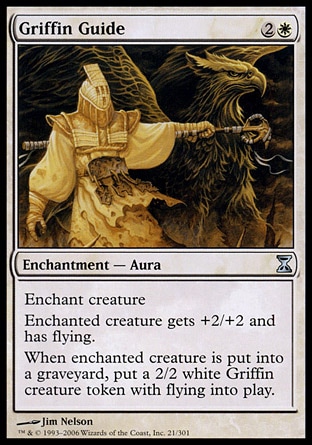
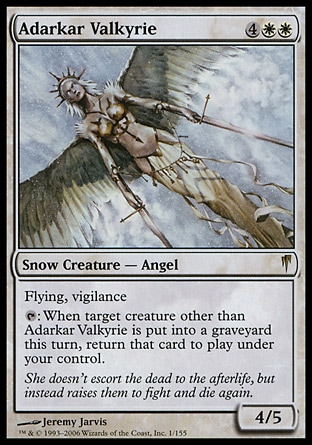
As a sidenote, my favorite Magic: The Gathering deck I own is one I constructed myself in 2007, comprised of some older "griffin" cards and things related (like one that gives another creature flying and then TURNS INTO A GRIFFIN when/if that creature dies). When I made it, griffins were just getting started as a Thing in Magic, so the deck isn't the best: older griffins cost a LOT of mana to get out, so it's usually really slow-going, and sometimes I don't even get a single griffin out before having my ass handed to me when playing with this deck. But it's still my favorite, because the creatures are mostly griffins (and some angels, like this one, my favorite angel that I own**). I have a friend with some newer griffins he's let me look at before, and I'm kind of tempted to do some selective online purchasing at some point and revamping the deck to make it work better, because the deck has that sentimental aspect to it- and while I'll prolly never deconstruct it, I'd be totes cool with improving it. But. Then I think, But how often would I be able to use it? And I decide not to, because the answer is, Prolly not enough to merit the cost. I have more important things to spend the money on, like my car, or my dog, or my health. Making adult decisions sucks, folks. Ugh. 


5) What fictional world is your home away from home? The DC Universe, specifically Gotham City. If only because of all of the settings in which my dreams take place, Gotham is the setting with the highest proportion of occurrence. Even when not dreaming about Bruce Wayne or (Dick Greyson- I left a recurring dream about him out of that post, since it was already way long), I find myself regularly dreaming about living in Gotham City in some capacity and being a do-gooder, again, in some capacity- reporter, non-profit advocate, mayor, lawyer, teacher. I'm always doing something good for the people in my city, and I'm my own, non-violent version of Batman each time. In those dreams, I feel strong, capable, confident, and beautiful, and I wish to God I could feel that way in my actual life, when awake, but I can't, try as I may. I come close sometimes, I do, but things always get in the way and the feeling in the real world gets ripped from me by the next wad of shit the universe decides to throw in my eyes. But as I've said before, I don't want to give up, I choose not to, and I'll keep fighting, and Gotham kind of symbolizes that in my head, just as much as Batman himself. 


6) If you could be any fictional character for a day, who would it be? This one  had me hung up for a while, but I finally figured it out. Catherine Winslow from the movie The Winslow Boy, based on the play of the same name (to my shame, I haven't read the play, but as there are extra scenes involving Catherine in the movie, I'm sticking with my guns, here). She's a suffragette and progressive, smart as Hell, and tough as nails. She has a lot to do with getting her brother out of the pickle forming the basis for the story, and she even gets the dashing lawyer in the end. 


7) What daily (or semi-daily) activity/chore do you wish you could get by without doing? Doing my hair. I hate my hair, it never cooperates, and it's just getting uglier and uglier as I get older. And I have grey hairs, and I'm only 28. Sigh.


8) What is your number one pet peeve? Empty words. I hate it when people are fake with me, or say something because they think it'd be easier for me to hear that, rather than the truth. Or when people are unable to follow through because they promised something they couldn't give. I'm so sick of people letting me down, and it all comes back to false promises and useless niceties. Just be real with me, don't bullshit me because you don't want to hurt me then-and-there- it hurts more when it's dragged out and I'm given reason to hope, only to have said hope crushed later on. Crap like this has been happening to me my entire life, and I hate it. 


9) If you had to pick an apocalypse, which one would you pick? This is kinda cheating, but...


10) What job did you want as a kid? What job would you want if you didn't have to worry about making money? I just wanted to teach English and history. Then some people told me I was "too smart" for that and needed to get a Ph.D. Ugh. Why  did I listen? Sigh. Anyhoo, now, if money wasn't an issue, and I'm also adding if I could do it instantly (because I am SO DONE WITH BEING IN SCHOOL), I'd say special ed. teacher. And yeah, as I said above, I'd also be a professional blogger, too- I'd go around and give TED talks and discuss how the media and pop culture can both reinforce and break down hegemonic discourses, can be a tool of oppression but also a source for liberation, etc. Yeah. 


11) What is your favorite color, and what is your favorite nerdy thing corresponding to that color? Silver. I love silver. And it's hard to find nice clothes that come in silver that don't look tacky, let me tell you- grey is usually pretty casual, but a good silver piece of clothing can be really sexy. My favorite blouse is a silver halter with beading at the top, goes great under this new blazer I got from work that's black with black roses embroidered all over it... Ahem, where was I? Oh yeah, so nerdy thing corresponding to that color... A friend of mine gave me a silver bracelet with the word "Dracarys" engraved on it for my birthday. I love it. And in case you don't know what I mean, this...


...is  always followed by this:


So I feel a little badass when I wear it. I don't really have anything else that's nerdy and silver, and meh, I associate my favorite comic book and video game characters with more traditional colors, like red and black and yellow and blue. And I took the question literal, as in something I own. And I'm sticking with the bracelet as such. But if we're going for the "fictional thing of that color" interpretation, then it'd be Anduril, the sword Aragorn gets in The Return of the King. 

So that's my story. Now the problem is, nominating other blogs. I can't re-nominate my roommie (but I can TOTALLY PLUG HER ANYWAY) (also, I am ENTIRELY UNSURPRISED you posted your own Liebster entry before me, Chels), and uh... I don't really follow many small-time blogs, so let's give this a try. Now I did think  hard about this, so if I'm tagging you for it, it means I either want to help motivate you into writing more, or I think you write enough and am just giving you props.

No One is Paying Me for This


Thumbz and Logik


Episcopalian "in" Planet Earth

John E.K. Carter

Glowy Stones

So, now, your questions, lovelies:

1) If you could have coffee with an historical figure, alive or dead, where would you take them, what would you order, and, of course, who would it be? 


2) Is your blog today what it was when you started? If not, how has it changed, and do you like those changes?


3) If you were going to guest-appear on Dancing with the Stars, what celebrity would you want to be paired with?


4) Is there a dish you've never made and want to try your hands at someday (and what is it, if that's a yes)?


5) What is your favorite (fictional) uniform?

6) If all cars suddenly disappeared, but you had the power to replace them with some alternate means of transportation (real or fictional), what would you choose? 

7) How long does it usually take you to write a blog post?

8) If you could be (or could have been) an extra on the set of any movie or tv show, what movie or show would it be, and what purpose would you serve? What shenanigans would you get into on-set?

9) If you had to die by the hand of a fictional character, who would you choose as your executioner and what would be their method?

10) If you could listen to the thoughts of one species of animal, what would that be?

11) If you were sucked into a vortex and spat out into a fictional world, what genre would you most want to be caught in?

And I guess that's it. Kinda anti-climactic. But yeah, fellow bloggers, go forth and do things!


This is actually Amanda.


*Actually, I'd prolly get reeeally gorram lonely sometimes. Sigh. I'm like that IRL, though, so meh. Same song, different verse. HAH! Get it? Because of all the music?


**I know a lot of people have angel decks, but I never acquired enough angels to make one of my own when I was still buying cards frequently. I play every so often still, but I haven't bought new Magic cards since 2009. Alas. 

Monday, March 24, 2014

The Final Frontier, Episode 1: 'Star Trek: The Motion Picture'

Update: I originally posted this in... like... October or something ridiculously long  ago, but when I was adding tags, it somehow got moved to the top. Sorry, I have no idea how the frak to fix it. :(

A few weeks ago, I bought the Blu-Ray box set of the movies from Star Trek: The Original Series. I'm inching my way through the actual series and have some ideas for blog posts there (that "Corbomite Maneuver" episode is SO RIPE for identity and international relations theory, and the draft has been sitting here for over three months...), but I thought I'd do some reviews/overthinkings of the movies as I go through them. Because, to my shame, I've never seen any of them all the way  through; or if I did, I was so little, I'll basically be watching them for the first time. My method will be taking little notes in a Word document as the movie is playing, then going back to them to try and get some themes and philosophizing out of the movies in something more orderly than, essentially, live-Tweeting or some kinda jazz. If anyone is interested in me live-Tweeting any movies, be they  these or others, though, since I'm not entirely terrible at peanut-gallery-ing, give me some suggestions/requests in the comments. (Just know that if it's not on Netflix, I'd of course need to have my own copy in order for that to work.)

Today's film  is Star Trek: The Motion Picture.


To get started, three things in the pre-movie phase. First, way too many previews, Paramount. Seriously, I watched almost an entire episode of Crash Course: U.S. History during the previews. Get it together.

Second, I'm curious as to who this woman on the poster is. Can't say I'm familiar with her off the top of my head, but I'm vaguely aware of much of the mythos and whatnot of the Star Trek universe, so mayhap it'll come back to me. If not, oh well. Although I gotta say, this speaks to the whole "pioneering" aspect of the original series, and I don't mean in the space-exploration sense, but with respect to women  and people of color actually having important roles in a series. Yay Roddenbery. 


Third, um, why the  heck is the theme to The Next Generation playing for the menu screen? This movie is about Kirk, not Picard. Who the frak packaged these??????

Okay. So a quick Wikisearch teaches me that Jerry Goldsmith composed the music, and  it was remixed to serve as the theme to Next Gen. Cool beans- I like his soundtracks a lot. 


So the not-so-thoughtful reflection is that the movie could probably have been at least twenty minutes shorter because of all of the sweeping shots of the Enterprise and the ship it encounters. Lens flares are to the reboot what pan-shots of ships are to this one. 


Now more importantly, I see two major themes or conflicts in this  movie. The first and central one for most of the time is the classic Old v. New one. It involves the now-Admiral Kirk and the current captain of the Enterprise, a young man named Decker whom Kirk had personally recommended to take over the ship. As this conflict usually goes, the previous person in charge "has" to take over (by asserting some area of expertise the  young upstart doesn't have- in this case, "five years' space exploration"  or something along those lines; as in, "I've been to space more. Neener.")- so literally the old person  pulling seniority- but they  aren't familiar with how things have changed since the last time they were around. Naturally, there comes a moment  when Kirk's unfamiliarity with how the electronics and power on the ship have been changed, and he gives a command that, if executed, would have blown up the ship- and Decker's intervention saves everyone. This pisses Kirk off, until Decker explains, but the older man soon throws a tantrum and it takes Bones being, as usual, the conduit for exposition, to state it pretty plainly- Kirk is somewhat obsessed with the Enterprise and it makes him dangerous to have at the helm. 

I did see this conflict extend more, though- Spock sort of gives Decker a hard time, too, and whether that's the bromance between him and Kirk, or you know, it's not, I'm not sure, but I think  this helps set up the choice Decker makes in the end  of the movie. He's the new guy, and with Spock's arrival, even though Decker is quite pleased to have him aboard (because it seems Spock has kept up-to-date with the evolution of Starfleet technology, unlike, I dunno, the rest of the gorram original crew that is somehow still on board), Decker's position on the ship is entirely unnecessary and obsolete. Which is ironic, as he's the new guy. But Spock has that unique position of bringing with him the knowledge of the new while the experience and connection of the old. So what can Decker do? He likely could have gone back to Starfleet and captained another ship, oh sure, but I doubt that would have been satisfactory. 

And this touches on all kinds of human institutions and organizations. There are whole theories of bureaucracy about how old fuddy-duddies (called "conservers") resist change and resent the young whipper-snappers that come in and want to "improve" things. But it doesn't need to be a formal institution for this sort of dynamic to present itself. I think we've probably all experienced it at some point, generally.

But specifically, consider that the main changes didn't have to do with protocol per se, but rather the technology on the Enterprise and how the different systems on board interact and make the whole ship run. Kirk's problem wasn't that he didn't understand Starfleet, or even how operations on his former ship would go on a normal day. His problem was that he was unaware of the evolution of the technologies used on the Enterprise. Meanwhile, younger members of Starfleet were being trained in the new technologies. He had no idea that a small change in how energy gets filtered through the ship could lead to catastrophic results if the systems on the ship were used the same way. No clue.


I think this is pretty apt for comparison to how quickly technology changes, how large those changes can be, and how easy it is to not realize technology has evolved so much so quickly. I'm guessing most (if not all) people reading this are under forty. It's the 25-35s I'm going to aim this particular part at, because  I feel like people within that age range are more like Spock (or a combination of him and Kirk); people older than that are like Kirk; and our younger siblings, cousins, etc. are like Decker. See, people in their early twenties or younger are growing up in a time where having the Internet on your phone is everyday and expected, not special. People around my age are young enough to get it and incorporate it without much hassle, but we very distinctly remember  when  stuff like that was a surprise or something exceptionally special- we prolly even remember a time when a CAR phone was amazing, let alone a mobile. And our parents? They remember a time before the Internet was available even at the home, let alone on a mobile telephonic devise. And it can be really hard for this last group to adapt sometimes because  as they do things the way they're used to, they don't realize things are being done entirely differently all around them.

I don't intend to sound like my generation is the most important in a normative sense, but I think it's our duty to sort of attempt to be like a combination of Bones and Spock. The latter does sort of give Decker  a rough time a little, but he also is able to adapt and understand the technologies that have developed since he  left the Enterprise  (and  this is from Vulcan, might I add). Meanwhile, Bones acted as the expository voice of reason with Kirk, reminding him he needs to cool his jets and give Decker (read: new technology) an honest chance. And importantly, Bones reminded Kirk that his  behavior is, at the very least self-destructive; at worst, it's threatening to everyone around him.

And there's an unfortunate truth to that today for people that don't digitize, use cell phones, etc. Setting aside the rather crude and mean treatment you may get if you don't have a cell phone (which, no, I don't agree with), there are strategic disadvantages to not having the Internet at least within the home: most job applications are online now; banks and insurance companies insist on using email and digital account services; utilities and housing properties prefer digital statements to paper; etc. 
And Word Processors and/or email addresses are required for a lot of parts of job applications, for college papers and requirements (like signing up for classes, accepting financial aid, etc.); and we often need a computer/printer for printing things at home, like boarding passes, tickets to events, or coupons. While sure, a body could go to the library to use the Internet (and the library printer, if necessary) for any  of these things, the time and inconvenience it would entail to make an outing of every attempt to handle your finances or get a coupon would be staggering.  And sure, some people may manage their study time better if they could only do it at a library, but what about things like  course registration, where there's only a specific period in which they can do it, and the time they'd lose getting to a library?

And personal inconvenience gets in the way, too. Since cell phones are so ruddy popular, the instinct  for a lot of people is  to expect the other person to use a GPS program in a smart phone, to text an address or date/time of some event, to have someone call from a specific destination in order to confirm a timeframe or "the plan," as it were, or to "check in" easier as they're out and about to keep someone concerned about them up-to-speed*. It's just kind of expected that people have cell phones today, and whether that's good or bad isn't the issue, it's the fact that society is structured that way. It wasn't like that even ten years ago, when I was still in high school; but my sister that graduated last year is too young to remember when it wasn't weird to be cell-phone-less. 

So it's in the best interest of generations not used to the digitization to try to adapt. But it's sometimes difficult to understand this. And I find younger people that have never known a world without cell phones and home Internet  have trouble explaining this to people that don't get it, and they're kind of unable to help directly, however much they may want to. So it's sort of up to the people in the middle to help out and foster adaptation and understanding as technologies evolve.

And that leads into the second major theme, one that actually doesn't really show up until the last twenty minutes (less, even) of the movie. It'd be lamesauce  to go after that female I mentioned before, Ilia, because hers is a pretty generic "consciousness" thing- she gets killed,  then a copy of her, with all of her memories, gets sent to the ship. Battlestar Galactica goes after that pretty much the. entire. series.

No, what I want to get at is the evolution of humans as a species. Because remember when I said Decker  "makes  a choice"? He chooses to merge himself  with a living machine, what he, Kirk, Bones, and Spock (again, through blatant  expository dialogue) come to realize is the Voyager 6 satalite (a made-up edition to the real-life Voyager program)- it conveniently got sucked into a wormhole at some point, was shat out near some organic robots that found it and gave it their own, organic technology, then shot back toward Earth. 


Now I talked before about the evolution of technology, but what happens when that gets combined with evolutionary biology? The dudes on the Enterprise, with yet another hammer of un-subtlety, muse about whether they witnessed the "birth of a new species," and it makes me wonder, what's the line between human and not-human? And this is different from the question in BSG- it's the reverse. The conflict in BSG is about what it takes to be human; I think Star Trek asks what it takes to be  not human. 

(Sidenote, and minor SPOILERS for BSG in this parenthetical aside: I'll admit, okay? This sort of does come up in the last few episodes. As the ship is literally falling apart, as in there are cracks within the hull, Adama decides to incorporate Cylon, organic technology into the hull to try and keep it together; the conflict there was, basically, "You're turning Galactica into a Cylon!" as in, "By adding these little blobs of organic goo to the cracks, you're changing the thing SO MUCH I CAN'T EVEN CONSIDER IT A BATTLESTAR ANY MORE!" And the answer never becomes entirely clear: Adama does it anyway, in order to save the ship and the people on-board, and I'm never under the impression he thinks Galactica isn't Galactica any longer, but he's one of the people against using the gel stuff in the first place, and once done, it gets conveniently not-dealt-with because of Reasons and Plot and Things.)

Because a new species when he entered the shining white light?

So this is human


but this isn't


Kirk says something about V'Ger, the Voyager-now-living thing, being able to have a "sense of purpose" now that Decker has merged with  it. Okay, cool, but what constitutes this being a new species entirely? Usually that "sense of purpose" would be the criteria for counting as human  in a sci-fi flick. 

I guess, perhaps, and I'm no evolutionary biologist, but perhaps this is because of how the whole "gene pool" thing works, and how cross-breeding leads to new things? Because eventually, the DNA gets different enough and it's a new species, right? But take plants for example, or better yet, apples. I love me some apples. Take a look at these:


Yum.
These are all apples, right? But they're the result of specific breeding to create deliberate alterations in the offspring of the "parent" apples that were cross-bred together. A red apple gets mated with a green one, and you get a yellow one (maybe- this is hypothetical, you get the  gist). But the yellow one is still an apple.

Or when people of different races make babies, those babies are still human. That's not up for debate, either. Even the racist biologists in the  nineteenth century  thought different races were human, even if the differences were used as justification for colonization, slavery, etc. 


So if humans were able to merge our DNA with technology somehow, would that mean we were no longer, biologically speaking, human any longer? How many chromosomes or helixes or whatever in our genetic make-up would have to change before we were no longer human?

I mean, maybe that's why Darth is still a human- he lost his legs (and arms, and lungs, and part of his face, and prolly some other stuff...), but his DNA didn't alter. We don't really get to know what happens to Decker himself, but the last time we see him, he's staring at Ilia's double with lovey-dovey eyes, and I think we're supposed to be under the impression he lives on within V'Ger itself. So then, uh, would the resultant babies be the offspring Bones so terribly  jokes about "delivering"**?


I guess I find the conclusion that Decker's merging with V'Ger creates a whole new species troubling. Because being human is more than just biology. You know, that whole "human experience" thing? Yeah, it's pretty speceist, I'll admit. But why exclude an entity that was the result of the merging of an undisputed human with something else from humanity?

And what was the reason for that merging, anyway? You could say it was because, as stated before, Decker didn't see much of a future for himself on the Enterprise. But beyond that, his act saved the whole friggin' planet Earth. V'Ger was about to destroy it. It was an act of love, compassion, and sacrifice- some of the "defining" characteristics of humanity. I'd feel safe and secure being around a hybrid like Decker. 


I'd say Decker and any offspring from his merging with V'Ger would be leaps and bounds more human than Darth Cheney. 


Scary-ass shit, right?


*I also think  of cell phones as a potential increase in safety. For example, if you're on a long trip  and the car breaks down,  you don't have to rely on the graciousness of others in order to get help- you can call for it (barring you have the  bars), rather  than wait for someone to let you hitch a ride. If something bad does happen to you and you have your phone, the authorities can use that to figure out who you are and maybe  even trace your last steps (and this  isn't to say your ID won't help, but if your ID is missing, it's of no use; and your ID isn't going to clue them in on your last conversation). But  this  whole  "safety" thing isn't really the "everybody has a cell phone" culture, though, it's more like one of the externalities of that culture. 

**I blocked the joke word-for-word out of  my memory because it was so bad, but there was definitely something about "delivering" in there that just... I mean... UGH.